
Romance scams are the most common consumer deepfake crime: stolen photos, AI-generated video calls, then the funds request. An AI deepfake checker will not save you on its own, but it earns a place in the routine, as long as you know how big the checker pool for a profile photo actually is.
The photo checker pool, counted
Our database tracks 60 deepfake detection tools. Dating profiles are still images before they are anything else, so the first filter is simple: does the tool check images at all? 48 of the 60 do. The second filter is price. Of those 48 image tools, 20 record a basic tier and 28 do not, which means the checker pool for a profile photo is 20 tools wide, not the endless app store list it feels like. The other 12 tools in the database skip images entirely and work on video, audio, or text instead.
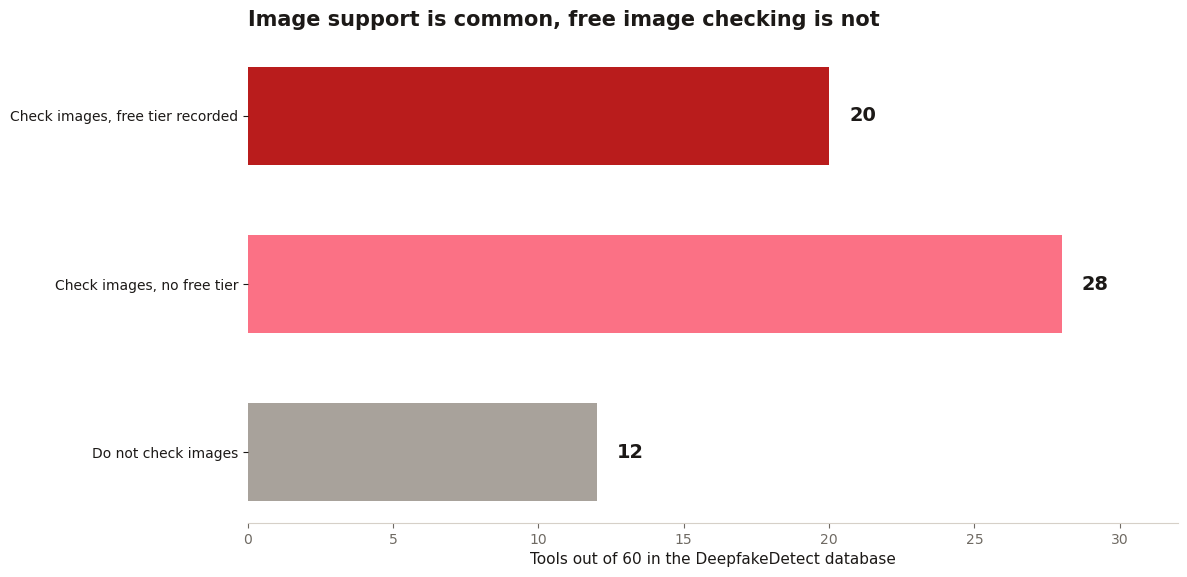
The names behind the 20 are a mix of research projects and commercial tools with a door in: Deepware Scanner, AI or Not, FotoForensics, Forensically, Illuminarty and Ghiro sit on the open side, while Hive Moderation, Sightengine and Reality Defender record a basic tier next to paid plans. That mix matters. A basic tier from a commercial vendor usually means rate limits and smaller files, while the research tools ask for patience and give you forensic detail instead of a single score.
One more number keeps expectations honest. Only 25 of the 60 tools in the database state any benchmark at all, and a photo verdict without a stated test behind it is an opinion with a progress bar. Treat every checker result as a prompt for the next step in the routine, never as the verdict itself.
The safety routine around the checker
1. Reverse image search every profile photo. Stolen model shots surface instantly, and this available step catches more fakes than any detector.
2. Run suspicious photos or clips through a checker before you get attached. FakeCheck runs per check, and the tools above cost nothing at all.

3. Insist on a live video call early. Then watch for the tells: unnatural blinking, audio that does not quite sync, backgrounds that shimmer.
4. Ask for an unpredictable gesture on the call. Wave with the left hand, hold up three fingers. Generated personas glitch on surprises.
5. Never send funds or gift cards to someone you have not met. No exceptions, no matter the story.
Sources: CISA
A dating profile rarely stays a photo for long. The conversation moves to voice notes and video calls, and the database covers those media too: 47 of the 60 tools check video and 22 check audio. The catch is overlap. Only 7 tools cover all four media types we record, so the checker that cleared the profile photo may have nothing to say about the voice note that arrives a week later. When the medium changes, the check has to change with it.
What a checker verdict actually means
A score is a probability dressed as a verdict, and the honest tools say so. Only 19 of the 60 tools in the database state an accuracy figure at all, and every one of those figures is a vendor claim recorded from the vendor, not a measurement we ran. A claim without a named benchmark behind it should move you less than a plain "inconclusive" from a tool that publishes its test set. In practice: one suspicious score means slow down and run the routine, two different checkers flagging the same photo means walk away, and no score at all means the photo was never the real test. The live call is.
Run the photo through DeepfakeDetect
DeepfakeDetect started as a comparison project for exactly these tools, and the checker is the consumer end of it: open DeepfakeDetect, send the profile photo, and get a verdict before the conversation goes any further. If the photo came from a video call instead, the same check runs on a frame grab, and our guide to video checkers covers the moving version of the problem.
The rule that prevents nearly all of it has not changed: move to a live, unscripted video call within the first week. Scammers resist this harder than any detector, and a profile that will not get on camera has already told you what the checker would.